- List your property - it's free
- Sign up or Log in
- English- en
- THB - ฿
- Buy
- Thailand Property For Sale
- Thailand Real Estate
- See Newest Listings
- Why Buy with FazWaz
- Rent
- Sell
- Financing
- Projects
- Advice
- Join Us We're Hiring!

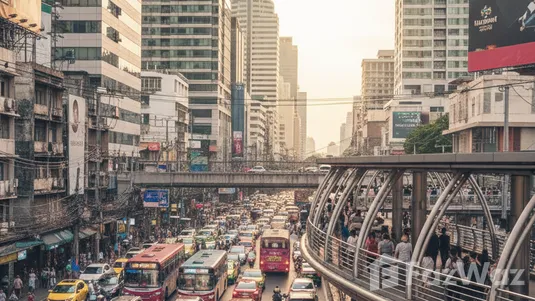
Thailand’s real estate market in 2025 was shaped not only by local demand but also by global and regional developments that influenced buyer confidence, travel flows, and investment decisions. While the market remained resilient—especially in Phuket, Samui, Bangkok, and Pattaya—several factors helped define the year’s momentum.
Below is a breakdown of the five most significant events and conditions that shaped property behavior in 2025.
Several major economies, particularly in Europe and East Asia, recorded slower growth in 2025. Instead of pulling back from the market, international buyers simply became more selective:
Despite macro softness abroad, Thailand remained one of Asia’s most stable destinations for lifestyle-led investment, with steady foreign absorption in key resort markets.
Airline capacity and shifting routes had direct impact on where—and how—foreign buyers explored real estate.
Tourism recovery didn’t move in a straight line, but consistently strong arrivals during the first three quarters helped maintain buyer activity across the major coastal markets.
Thailand experienced several notable natural events in 2025, including:
While these events did not dampen demand significantly, they prompted buyers to ask more detailed questions about:
This shift toward due diligence ultimately supported reputable developers and well-planned projects, especially in Phuket, Bangkok, and Koh Samui.

Cross-border work and remote-working patterns continued to evolve in 2025:
This segment consistently supported absorption in well-managed, mid-to-upper tier developments.
Fluctuating exchange rates played a quiet but meaningful role in 2025:
Local mortgage rates held stable, keeping domestic buying healthy, especially in Bangkok’s transit-linked corridors.
2025 was shaped by a mix of global economic shifts, tourism patterns, natural events, and currency movements. Yet the overall narrative remained consistent:
Understanding these dynamics helps investors position themselves more confidently for 2026, especially as flight capacity expands, tourism stabilises further, and completed inventory becomes an even stronger advantage.

 Language
  Price display