- List your property - it's free
- Sign up or Log in
- English- en
- THB - ฿
- Buy
- Thailand Property For Sale
- Thailand Real Estate
- See Newest Listings
- Why Buy with FazWaz
- Rent
- Sell
- Financing
- Projects
- Advice
- Join Us We're Hiring!
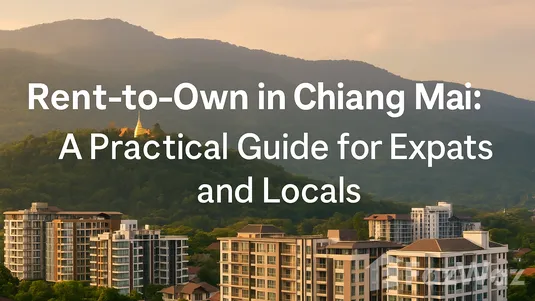
Chiang Mai is not Bangkok, Pattaya, or Phuket. It doesn’t have high-rise skylines packed with offices or a beachfront lined with tourist villas. Instead, it’s a mountain city known for its relaxed lifestyle, creative communities, and affordability. These qualities have made it a magnet for retirees, digital nomads, and long-stay expats from around the world.
But while many people dream of calling Chiang Mai home, the step from renting a condo or villa to owning one can feel out of reach. Banks rarely lend to non-resident foreigners, and even long-term expats with stable overseas income are often denied mortgages. Thai nationals face their own struggles as debt-to-income rules tighten and rejection rates for lower-priced homes remain high.
Rent-to-Own (RTO) is a financing model that bridges this gap. Instead of needing a bank loan, buyers pay a deposit and then monthly installments that gradually count toward ownership. For expats who want permanence and Thais who are blocked by the banking system, RTO creates a clear path from renting to owning.
Browse Rent-to-Own Homes in Chiang Mai
Chiang Mai has a very different property market compared to Bangkok or Pattaya. While there are modern condominiums, the city is better known for its houses and villas spread across suburban neighborhoods and surrounding valleys.
Condominiums in Chiang Mai are concentrated around Nimmanhaemin, the Old City, and near Chiang Mai University. These units appeal to students, professionals, and digital nomads. But supply has outpaced demand in recent years, leaving developers with excess inventory. Many condos sit empty despite attractive pricing, which makes developers more open to flexible deals such as RTO.
Villas and houses are popular among retirees and families who want more space. These properties are often located in gated communities or just outside the city center. Foreigners face restrictions here: they cannot own land outright, so villa ownership usually involves leasehold structures or a Thai company setup. Still, demand is strong from expats who want more than just a condo lifestyle.
At the same time, access to mortgages remains limited. Rejection rates are high for both Thais and foreigners. Household debt in Thailand has climbed close to 90% of GDP, pushing banks to apply stricter affordability checks. Even Thais with steady incomes often find themselves told “no.” For foreigners, unless they hold permanent residency, earn a Thai salary, or have a Thai spouse co-signing, mortgages are nearly impossible.
The result is a large pool of renters who could easily afford to own if given an alternative to bank loans. This is why RTO is gaining attention in Chiang Mai.
Rent-to-Own combines renting and buying into a single agreement. The buyer pays an upfront deposit, moves into the property, and then pays monthly installments. At the end of the term, the buyer has the right — and usually the intention — to purchase the property at the pre-agreed price.
In practice, it looks like this:
A deposit of 20–30% of the purchase price secures the right to buy.
The purchase price is fixed from the start, protecting the buyer from future price increases.
The monthly rent is slightly higher than market rent because a portion is credited toward the purchase price.
The term usually lasts two to five years. At the end, the buyer pays the remaining balance and the property transfers.
If the buyer decides not to go through with the purchase, the deposit and rent credits are usually non-refundable. But unlike a mortgage, there is no risk of foreclosure or long-term debt hanging over the buyer.
In Thailand, RTO contracts are legally recognized if structured correctly. For condominiums, the process is straightforward — foreigners can hold title directly, provided the building has not exceeded its 49% foreign quota. For villas, the RTO is often structured as a long-term lease with an option to buy, or combined with a Thai company structure. Either way, the law allows these arrangements when the contracts are clear and registered.
Rent-to-Own is not just a clever financing trick. It solves real problems for both buyers and sellers in Chiang Mai.
For expats, the main barrier to ownership is not income but access to loans. Many digital nomads, retirees with pensions, and entrepreneurs with overseas earnings could easily manage monthly payments. But banks don’t recognize these incomes as stable enough. RTO removes the bank from the equation entirely.
For Thais, mortgage rejection is also a major issue. Strict debt-service ratio rules mean anyone with a car loan, personal debt, or irregular income may be denied. Yet many of these buyers still have enough cash for a deposit and stable monthly earnings. RTO gives them a second chance.
For sellers and developers, RTO provides a way to move inventory faster. Chiang Mai has seen a buildup of unsold condos, and some gated villa projects are slower to sell than expected. Instead of leaving units empty or heavily discounting, sellers can attract committed buyers through RTO, securing income and eventually completing a sale.
In short, Chiang Mai’s mix of expat demand, Thai buyer challenges, and developer oversupply makes it an ideal market for Rent-to-Own.

The benefits of RTO in Chiang Mai go beyond simply bypassing the banks.
First, it allows immediate move-in. Buyers don’t need to wait years to save up or hope for a bank loan. Once the deposit is paid, they can start living in the home they intend to own. This is especially appealing for expats who plan to stay long-term and want stability.
Second, it builds equity. Each monthly payment goes partly toward ownership. Instead of paying rent with nothing to show for it, RTO ensures that part of the money is invested in your future property.
Third, it locks in the price. Chiang Mai’s property prices have generally been more stable than Bangkok or Phuket, but inflation and demand can still push values upward. By fixing the price at the start of the contract, buyers protect themselves from future increases.
Finally, it offers flexibility. Most RTO agreements allow buyers to complete the purchase early if their finances improve. For example, if an expat later qualifies for a mortgage, they can use it to settle the balance and take the title immediately.
Rent-to-Own applies to both condos and villas, but buyers should understand the differences.
Condos are the simplest option for foreigners. Ownership is direct and freehold, as long as the building’s foreign quota has not been exceeded. At the end of the RTO contract, the buyer’s name is registered on the title deed, just like a traditional sale. This makes condos the most straightforward and secure choice.
Villas are more complex because foreigners cannot directly own land. RTO contracts for villas are usually structured as long-term leases (up to 30 years) with an option to buy the building. Some buyers also use Thai company structures, though these require careful compliance. While villas offer more space and privacy, buyers should be aware of the legal limitations and always work with a lawyer to structure the contract correctly.
The steps to securing a Rent-to-Own property in Chiang Mai are fairly straightforward, but they require careful attention to detail.
First, you need to find an eligible property. Not every listing will advertise RTO terms, but many sellers and developers are open to negotiation. FazWaz has a dedicated Rent-to-Own program that identifies such properties.
Second, you negotiate the key terms. This includes the deposit (commonly 20–30%), the monthly payment, how much of it counts toward the purchase price, the length of the contract, and whether there is flexibility for early completion.
Third, the contract must be drafted and reviewed. It should clearly state the purchase price, the deposit, the credit applied from monthly payments, and what happens if either side defaults. For condos, ensure that the foreign quota is available. For villas, make sure the lease and option to buy are properly documented.
Fourth, the agreement should be registered when required. Leases longer than three years must be registered at the Land Office. Even shorter contracts should be handled by professionals to ensure enforceability.
Fifth, you move in and begin paying monthly. During this period, you live in the property as if it were already yours, while steadily building equity.
Finally, at the end of the term, you exercise your option to buy. You pay the balance, and the property is transferred into your name (for condos) or secured under the agreed legal structure (for villas).
Like any property deal, Rent-to-Own carries risks if not managed properly.
The biggest risk is losing your deposit and monthly credits if you fail to complete the purchase. Buyers should only enter an RTO agreement if they are confident in their ability to follow through.
Another risk is unclear contracts. If the agreement does not spell out what happens in case of default, market changes, or disputes, both parties could be exposed. Always work with a lawyer or a trusted platform to ensure everything is documented.
For condos, foreign ownership quota is a crucial point. If the building is already at its 49% foreign quota, you cannot take ownership. Make sure this is checked and confirmed before signing.
For villas, the risks are tied to land ownership restrictions. Leasehold and company structures are legal, but they require careful drafting. Buyers should be realistic about what they are legally allowed to own.
The best way to avoid these risks is to work with professionals, use escrow services where possible, and never rely on informal agreements.
RTO is particularly well-suited to retirees with pensions who cannot secure a Thai mortgage, digital nomads and freelancers with overseas income, and Thais who face rejection due to debt ratios.
Developers with unsold condos also benefit, as do villa owners looking for serious buyers. By widening the pool of potential purchasers, RTO creates opportunities that traditional sales miss.
In essence, RTO aligns with Chiang Mai’s demographics: long-term residents who want stability, sellers who need flexibility, and a market that values creative solutions.
Owning a property in Chiang Mai has always been more challenging than renting. But Rent-to-Own changes that equation. It bypasses the banks, lets you move in immediately, builds equity with each payment, and gives both buyers and sellers a structured, fair path to ownership.
For expats who want permanence in Chiang Mai and Thais who have faced rejection from banks, RTO offers a bridge to homeownership. It turns the dream of settling in Chiang Mai into a practical reality.
👉 Ready to take the next step? Browse FazWaz’s Rent-to-Own listings in Chiang Mai today and find your future home in Thailand’s cultural capital.

 Language
  Price display

