- List your property - it's free
- Sign up or Log in
- English- en
- THB - ฿
- Buy
- Thailand Property For Sale
- Thailand Real Estate
- See Newest Listings
- Why Buy with FazWaz
- Rent
- Sell
- Financing
- Projects
- Advice
- Join Us We're Hiring!
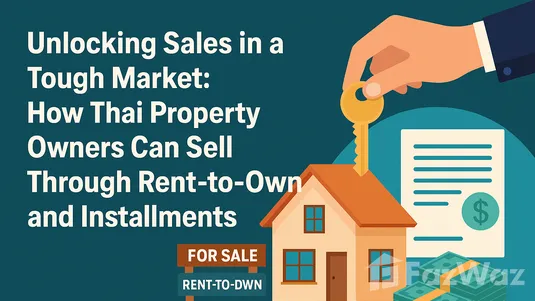
Thailand’s property market has slowed, leaving many condo and villa owners struggling to sell despite repeated price cuts. The reasons are structural: banks are rejecting more than 70% of mortgage applications, particularly for first-time buyers, self-employed individuals, and expats. At the same time, oversupply has left hundreds of thousands of homes unsold, with Bangkok’s inventory alone taking years to clear at the current pace. This mix of tight credit and too much supply has trapped willing buyers on the sidelines and sellers with listings that simply do not move.
For owners in this situation, rent-to-own is an alternative worth considering. Rent-to-own, also known as installments or owner financing, allows you to connect with committed buyers who can pay over time even if the banks will not finance them. From a seller’s perspective, it can turn a stalled listing into a steady income stream and eventually a full-value sale.
Selling property in Thailand is challenging for reasons beyond a seller’s control. Mortgage rejection rates are high, shutting out many qualified buyers who lack the paperwork banks demand. Self-employed workers, entrepreneurs, young professionals, and expats are particularly affected, even when they have stable income and savings. Meanwhile, oversupply gives buyers the upper hand. New condos and houses continue to enter the market, but demand is not keeping pace. Sellers find their listings competing against countless alternatives, often sitting for months with no progress. The only quick route is often slashing prices, but that means losing significant value.
Rent-to-own bridges this gap. Instead of waiting for the rare cash-rich buyer or accepting heavy discounts, you can sell directly to buyers who have funds but cannot qualify for traditional bank financing.
Rent-to-own is a hybrid between renting and selling. As the seller, you enter into a contract where the buyer pays you an upfront deposit, often 20 to 30 percent of the agreed purchase price, and then continues with monthly installments for a set period, typically up to three years. Ownership stays in your name until the full amount is paid. The buyer gets to live in the property as they make payments, while you receive steady income during the process.
The process works step by step. You and the buyer first agree on the purchase price and terms, including the deposit and length of the installment period. A legal rent-to-own contract is then signed, spelling out responsibilities, payment schedules, and what happens in the case of default. After the buyer pays the deposit, they move in and begin paying the monthly installments. These installments usually cover both the rental value and a portion of the purchase price. Finally, once the total amount is paid, you transfer ownership at the Land Office.
This structure keeps you secure. You remain the legal owner until the final payment is made, and the contract ensures that if the buyer defaults, you can retain the deposit and all payments collected while still holding the property.
Rent-to-own unlocks a large group of buyers who would otherwise be excluded from the market. Many foreign residents and retirees in Thailand cannot access local mortgages, but have sufficient income and savings to buy in installments. Self-employed individuals and small business owners may have strong cash flow, but lack the payslips or credit history banks prefer. First-time buyers and young families are often shut out due to strict debt-to-income rules, even when they can afford monthly payments. There are also renters already paying substantial amounts each month who would prefer to buy but cannot qualify for loans.
These buyers are highly motivated, often frustrated by bank rejections but eager to own. The upfront deposit ensures only serious buyers enter into agreements, giving you greater stability as a seller.
The financial appeal of rent-to-own is strong. In a slow market, sellers often face two poor options: slash the asking price or wait with an empty property. Rent-to-own offers a third way. By locking in your full asking price and allowing payment over time, you avoid fire-sale discounts. Buyers in these deals are often willing to pay the full market price because what they gain is the opportunity to own.
Sellers also benefit from an immediate cash injection through the deposit, which can be used to pay off existing loans or invested elsewhere. Monthly installments then provide steady income, often covering maintenance costs, common fees, or even generating positive cash flow. Compared to traditional renting, rent-to-own can yield higher returns because installment payments are usually set above normal rent levels, and you still receive the lump sum at the end of the term.
Importantly, this model gives you certainty. Each payment brings the buyer closer to completing the purchase, and you know in advance when the property will be sold and for how much.
A common concern is whether a buyer might stop paying. Rent-to-own contracts are designed to minimize this risk. First and most importantly, you keep the title deed until the buyer pays in full, so you never lose ownership until the deal is complete. The legal contract specifies the terms of default, usually allowing you to retain all payments made up to that point if the buyer fails to continue.
Even in the case of default, sellers benefit financially by keeping the deposit and any installments already paid. Because buyers view the property as their future home, they are typically responsible for maintenance, reducing your landlord obligations. Payment tracking and reminders can be managed through professional platforms to ensure transparency and avoid disputes. Most agreements also allow early buyout, meaning if the buyer’s financial situation improves, you receive the balance sooner.
For property owners who want a simple and safe way to try rent-to-own, platforms like FazWaz provide structured programs that handle the process from start to finish. Sellers can list their property, opt into rent-to-own offers, and have their documents collected and verified. There are no upfront fees; commissions are deducted only upon a successful sale.
Once opted in to rent-to-own, your property is marketed directly to buyers searching for alternative financing options. Interested buyers are pre-screened to confirm they have the necessary deposit and income to support monthly installments. Standardized, legally reviewed contracts are provided, and the platform tracks payments and handles any issues that arise. When the buyer completes payments or chooses to pay off early, the platform coordinates the Land Office transfer and all closing procedures.
This makes the process hassle-free for sellers, who remain in control while receiving legal and professional support throughout.
Rent-to-own offers a practical solution for Thai property owners who feel trapped by the slow market. By keeping ownership until fully paid, sellers remain secure while tapping into a much larger pool of motivated buyers. The model provides upfront cash, monthly income, and full sale value without deep discounts. With proper contracts and professional support, rent-to-own is both safe and profitable for sellers.
For owners struggling to sell, this strategy can transform a stagnant listing into a guaranteed sale. By embracing rent-to-own, you avoid endless waiting and create a win-win path where buyers achieve homeownership, and you achieve the sale you need.

 Language
  Price display

