- List your property - it's free
- Sign up or Log in
- English- en
- THB - ฿
- Buy
- Thailand Property For Sale
- Thailand Real Estate
- See Newest Listings
- Why Buy with FazWaz
- Rent
- Sell
- Financing
- Projects
- Advice
- Join Us We're Hiring!
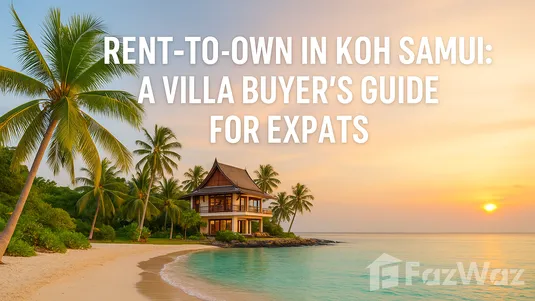
Koh Samui is one of Thailand’s crown jewels. With its palm-lined beaches, lush hills, and luxury villas perched over turquoise waters, it’s no surprise that so many foreigners dream of owning a home here. For expats, Samui represents more than just a tropical holiday escape—it’s a lifestyle. Many long-term residents come for the sunshine and stay for the sense of community, the slower pace, and the island’s unique mix of modern amenities and natural beauty.
But as enchanting as Samui is, turning that dream villa into reality can be daunting for foreign buyers. Thai property law restricts land ownership by foreigners, and banks rarely extend mortgages to non-citizens. This combination creates one of the biggest barriers for expats: even if they have stable income or savings, financing a villa purchase through traditional channels is nearly impossible.
That’s where Rent-to-Own (RTO) comes in. For many expats, RTO offers a bridge between renting and owning, allowing them to secure a villa in Samui without relying on a bank loan. In this guide, we’ll explore how rent-to-own works, why it suits Samui’s villa market so well, the legal basics you need to know, and how to take practical steps toward ownership.
Browse Rent-to-Own Homes in Koh Samui
Mortgage rejection rates in Thailand have soared in recent years. Even Thai citizens face growing difficulties with loan approvals due to high household debt and strict debt-to-income rules. For foreigners, the odds are even worse.
Thai banks typically require borrowers to have permanent residency, a long work history in Thailand, or a Thai spouse to act as guarantor. Even then, down payments of 40–50% are often demanded. For the majority of foreign buyers in Samui—many of whom have overseas income or are semi-retired—this makes local mortgages an unattainable option.
This leaves two paths: paying cash upfront, which few expats can manage for multimillion-baht villas, or seeking creative alternatives. Rent-to-own has become one of the most practical of those alternatives, especially in a market like Samui where villa supply is plentiful and sellers are motivated.
Rent-to-own is simple in concept: you agree to rent a property now with the option (and often the obligation) to buy it later at a pre-agreed price. A portion of your rent payments counts toward that future purchase, along with an upfront deposit.
Think of it as “try before you buy” combined with an installment plan. You move into the villa, live there as a tenant-buyer, and over a set term (often one to five years), your payments accumulate toward the ownership price. At the end of the term, you complete the purchase—either through cash, financing, or extending the arrangement.
For expats in Samui, this arrangement bypasses the bank completely. You don’t need to qualify for a mortgage, and you get to enjoy your dream home immediately rather than waiting years to save up the full price.

Koh Samui’s real estate market is heavily skewed toward villas. While condos exist, the island is best known for its private pool villas overlooking the sea. These properties are especially appealing to expats who want space, privacy, and the option to rent out their home for income.
However, villas also bring challenges: foreigners cannot directly own land in Thailand, which every villa sits on. Ownership structures must therefore use leasehold agreements, company setups, or hybrid models. Add the lack of mortgage financing, and it becomes clear why many expats feel “locked out.”
Rent-to-own bridges this gap. For sellers, offering RTO means they can reach a wider pool of foreign buyers who have savings for a deposit but not the full lump sum. For buyers, it means securing a villa today and spreading payments over time, all under a legally recognized structure.
Samui also has a significant stock of villas available—both new builds and resale homes—which creates opportunities for rent-to-own negotiations. Sellers looking to generate income while waiting for a full sale are often open to RTO deals.
While this guide is practical rather than heavily legal, it’s important to understand the basics of how RTO interacts with Thai property law:
The bottom line: rent-to-own is legally feasible in Thailand, but contracts must be carefully drafted. Always involve a property lawyer or use a trusted platform like FazWaz to ensure the deal is watertight.
While every deal varies, a typical RTO villa purchase in Samui might follow this path:
This process allows you to secure the villa and start enjoying it right away, while also building equity toward ownership.
For expats, the advantages of RTO in Samui are clear:
For sellers, the benefits include a larger pool of potential buyers, steady rental income, and a committed pathway to sale.
Like any major financial decision, rent-to-own carries risks if not handled carefully. Buyers risk losing their deposit if they cannot complete payments. Sellers risk dealing with defaulting tenants.
To mitigate these risks:
Handled correctly, RTO can be safe and reliable, but shortcuts should be avoided.
Koh Samui continues to attract foreign residents and investors, particularly retirees, digital nomads, and second-home buyers from Asia and Europe. Yet financing barriers remain unchanged, making RTO an increasingly relevant solution.
At the same time, Samui has a significant supply of high-end villas—many built before the pandemic—that remain unsold. Developers and private sellers are motivated to consider flexible structures like rent-to-own to capture buyer interest.
This convergence of demand (foreigners eager to own but unable to secure mortgages) and supply (sellers holding inventory) suggests that rent-to-own will only grow in prominence in Samui’s real estate market.
For expats, Koh Samui’s villa lifestyle is a dream that often feels just out-of-reach due to legal and financial hurdles. But rent-to-own changes the equation. By combining the flexibility of renting with the goal of ownership, RTO allows foreign buyers to secure villas in Samui without waiting years or relying on banks that are unlikely to approve their applications.
If you’ve been renting in Samui and wishing you could one day own the villa you live in, or if you’ve been hesitating because of financing barriers, rent-to-own may be your solution. With careful contracts and the right partner, you can move in today and work steadily toward full ownership.
👉 Ready to explore your options? Check out FazWaz’s Rent-to-Own listings in Koh Samui and discover villas where you can start your ownership journey now. The tropical lifestyle you’ve imagined doesn’t have to remain a dream—it can begin today.

 Language
  Price display

